When your AC stops working in Southwest Florida, it is easy to focus only on speed and price.
Who can come today?
Who is the cheapest?
Who says they can “take care of it” without all the paperwork?
We understand the impulse. When the house is hot, you want it fixed.
But when it comes to AC work in Florida, especially replacements, remodels, and new construction, the legal way matters.
Licensing, insurance, permits, code compliance, and inspections are not just red tape. They help protect your home, your equipment, your warranty, and your safety.
Florida AC work requires the right license
The Florida Department of Business & Professional Regulation, commonly called DBPR, lists air-conditioning among the construction trades requiring a state license.
That matters because AC systems are not just appliances sitting in a closet or outside on a pad.
Your AC system is a major component in your property, containing and connecting:
- Electrical systems
- Refrigerant circuits
- Condensate drainage piping
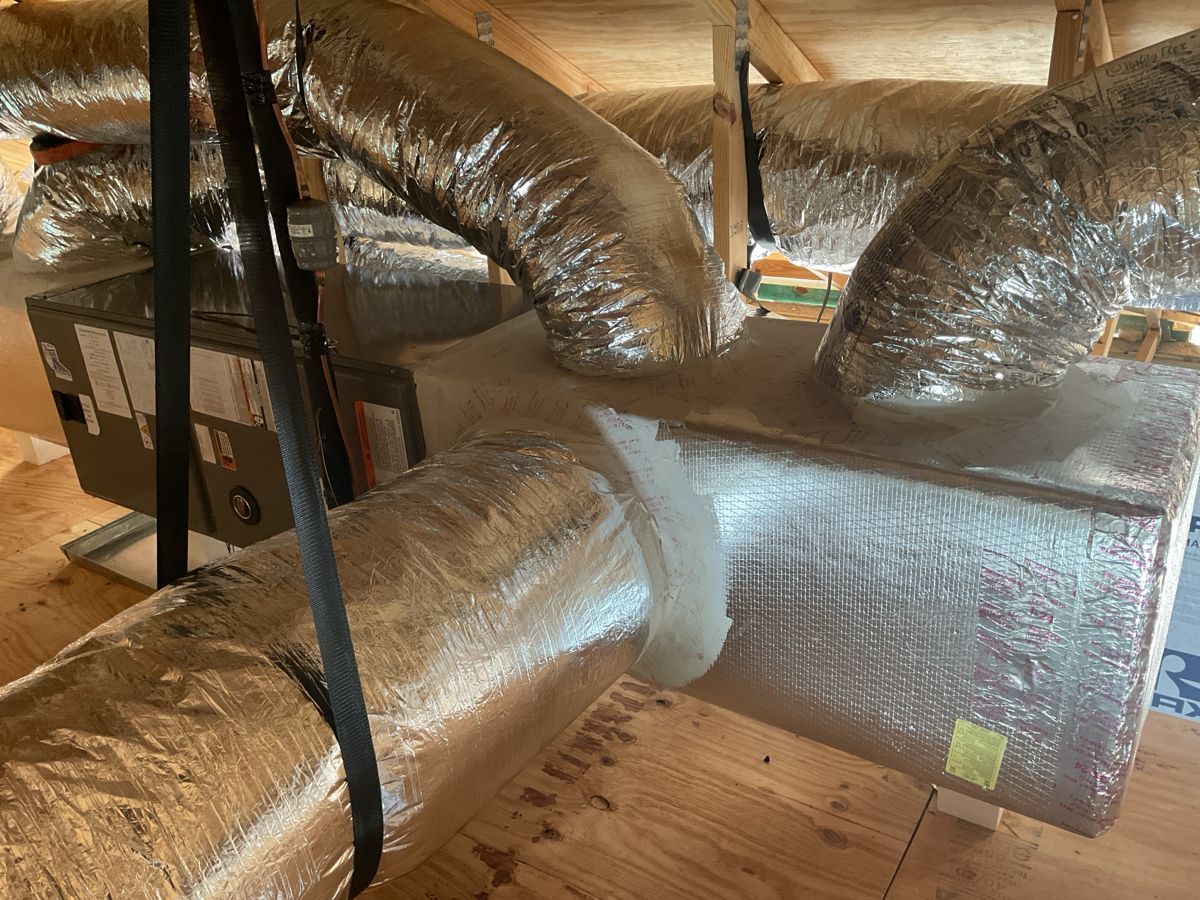
- Ductwork and airflow
- Structural openings and equipment access
- Energy performance
- Safety controls
A properly licensed AC contractor is accountable for knowing what work they are allowed to perform, when permits are required, what code requirements apply, and what needs to be inspected.
Said another way, a Florida AC license is not just a number on a truck. It is part of the accountability system that protects homeowners.
A license is more than a logo
DBPR’s licensing process is not just “fill out a form and get approved.”
For certified air-conditioning contractors, DBPR’s checklist includes items such as experience or education requirements, multiple examination requirements, fingerprinting/background screening, financial responsibility, public liability and property damage insurance, and workers’ compensation coverage.
That is why “licensed and insured” should matter to homeowners.
It means there is a real company, a real license, and real responsibility behind the work.
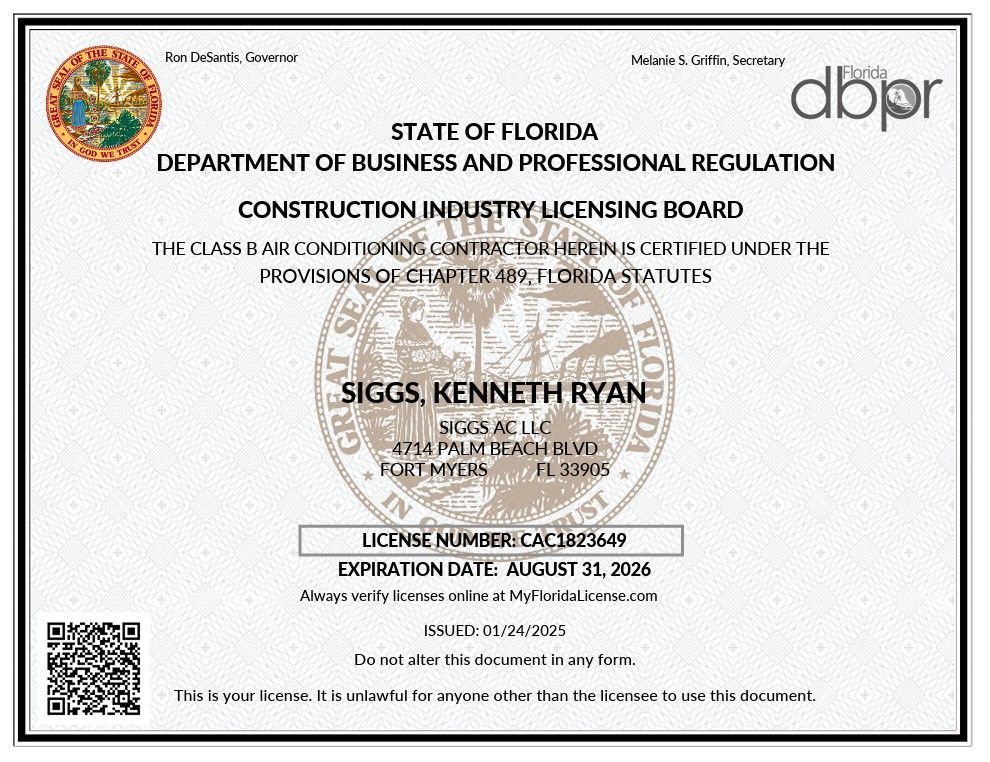
At Siggs Air Conditioning, we take that seriously. We are a licensed Florida AC contractor, and our license number is listed publicly because that is exactly how it should be.
Watch for the license number
DBPR gives a simple red flag to watch for: missing license numbers in an advertisement or document.
DBPR requires licensed contractor to publish their license number in advertising and documentation, so if a license is not listed and cannot be verified, property owners should immediately move on.
A simple, practical check point before hiring someone for major AC work, ask:
- What is your Florida contractor license number?
- Can I verify it through DBPR or MyFloridaLicense.com?
- Are you insured?
- Can I get a copy of your current insurance certificate?
- Who is actually performing the work?
- Will this project require a permit?
- Who pulls the permit?
- Will there be an inspection?
A legitimate contractor should not be bothered by those questions and should have the information ready to share.
Why permits matter
Permits are another part of doing the job correctly.
For many AC projects, a permit is required by the local building department. That can include new AC installations, replacement systems, remodel work, and new construction HVAC scopes.
Whether your property falls under the jurisdiction of the City of Fort Myers Building Department or Lee County Community Development, the Florida Building Code applies, along with local ordinances and rules.
Licensed contractors must be registered and active with the governing municipality to pull permits and call inspections.
Siggs Air Conditioning covers every municipality in SWFL, so we're setup and ready to follow the appropriate process in each part of our community. We regularly meet with local building officials to stay current on any code changes or issues and review all inspection results at our weekly team training sessions.
The details vary by city, county, property type, and scope of work, but the general idea is simple:
If the job requires a permit, the permit should be pulled and followed through passing final inspection.
Be careful with “no permit needed”
One of the biggest red flags is when someone says a permit is not necessary just to make the job cheaper or faster.
DBPR specifically warns homeowners about contractors who say permits and inspections are not required, or who suggest the homeowner pull the permit to save money. That does not mean every small service call needs a permit. Replacing a capacitor, clearing a drain line, changing a thermostat, or diagnosing a no-cool issue is different than replacing a system or building a new home.
Skipping the permit may seem easier in the moment, but it can create problems later, including:
- Failed home sale or inspection questions
- Insurance coverage concerns
- Warranty eligibility issues
- Code compliance violations
- Unsafe or improper installation details
- No clean record of who performed the work
- Trouble proving the job was completed correctly
A properly permitted job gives the homeowner a cleaner paper trail, and comfort in knowing their work was done properly and in accordance with the latest codes.
Code compliance is about more than passing inspection
Passing inspection matters, but code compliance is not just about checking a box.
A quality AC installation should consider:
- Correct equipment sizing
- Electrical requirements
- Breaker and disconnect compatibility
- Condensate drain layout
- Float switch protection
- Outdoor unit hurricane tie-downs
- Refrigerant line installation
- Ductwork condition and airflow
- Equipment access for future service
- Manufacturer installation requirements
- Startup and commissioning
Said another way, a new system can be fancy but still be wrong if it is not installed correctly.
Keep in mind, code compliance is the life-safety minimum required. It does not mean high quality or best.
That is why we focus so much on airflow, drainage, equipment access, comfort, and commissioning. The equipment brand matters, but the installation matters just as much.
Insurance protects everyone
Insurance is another piece homeowners may not think about until something goes wrong.
A legitimate contractor should have appropriate coverage for the type of work being performed. That helps protect the customer, the property, and the company’s employees. Appropriate coverage includes general liability, automobile, and workers' compensation.
This is also why it matters who is actually doing the work. A homeowner should know whether the company is sending trained employees, subcontractors, day labor, or someone operating under another company’s name who may not actually be covered by the company's insurance - exposing the property owner to liability.
At Siggs AC, we only have fully insured in-house team members working under our license, our standards, and our responsibility. That accountability matters.
The cheapest number is not always the lowest cost
There are plenty of times when a simple repair is the right answer. Not every AC problem needs a replacement, and not every customer needs the most expensive, high-efficiency system.
But be careful when someone offers a major AC job that is dramatically cheaper because they are skipping licensing, permits, inspections, insurance, legitimate equipment, or documentation.
That “deal” can get expensive later.
It may mean:
- They are not licensed for the work
- They are not properly insured
- They do not want the work inspected
- They are cutting corners
- They are installing stolen goods
- They are avoiding documentation
- They may not be there if there is a problem later
The lowest price up front is not always the lowest cost over the life of the system.
What property owners should verify
Before approving major AC work, especially a replacement, mini split installation, duct modification, remodel, or new construction project, ask:
- What is your Florida contractor license number?
- Can I verify the license with DBPR?
- Are you insured?
- Can I get a copy of your active insurance certificate?
- Will this work require a permit?
- Who pulls the permit?
- Will there be an inspection?
- Who is actually performing the work?
- Will I receive documentation after completion?
- What warranty applies?
- Does anything need to be registered with the manufacturer?
A contractor doing the work the right way should be able to answer clearly.
The Siggs takeaway
Doing AC work the legal way is not about making the process harder - it is about protecting the property owner.
Licensing, insurance, permits, inspections, manufacturer requirements, and code compliance all help make sure the work is done properly and documented clearly.
At Siggs AC, our goal is simple: practical recommendations, clean workmanship, clear communication, and doing the job the right way.
If your system needs repair, replacement, ductwork, mini split installation, or HVAC support for a remodel or new construction project, we are happy to walk you through what is required and what makes the most sense for your home.
No pressure. No shortcuts. Just air conditioning done the right way.