If your home feels muggy even though the AC is running, you are not imagining it.
In Southwest Florida, comfort is not just about the temperature on the thermostat. Your thermostat may say 74°, but the house can still feel sticky, heavy, or uncomfortable.
That is because your body does not only feel temperature. It also feels moisture in the air.
Temperature is only part of comfort
Most people focus on temperature first, which makes sense. The AC is supposed to cool the house, and the thermostat is the number everyone sees.
But comfort has more depth than one number.
74° with lower humidity can feel great.
74° with high humidity can feel muggy and uncomfortable.
Same temperature. Totally different feel.
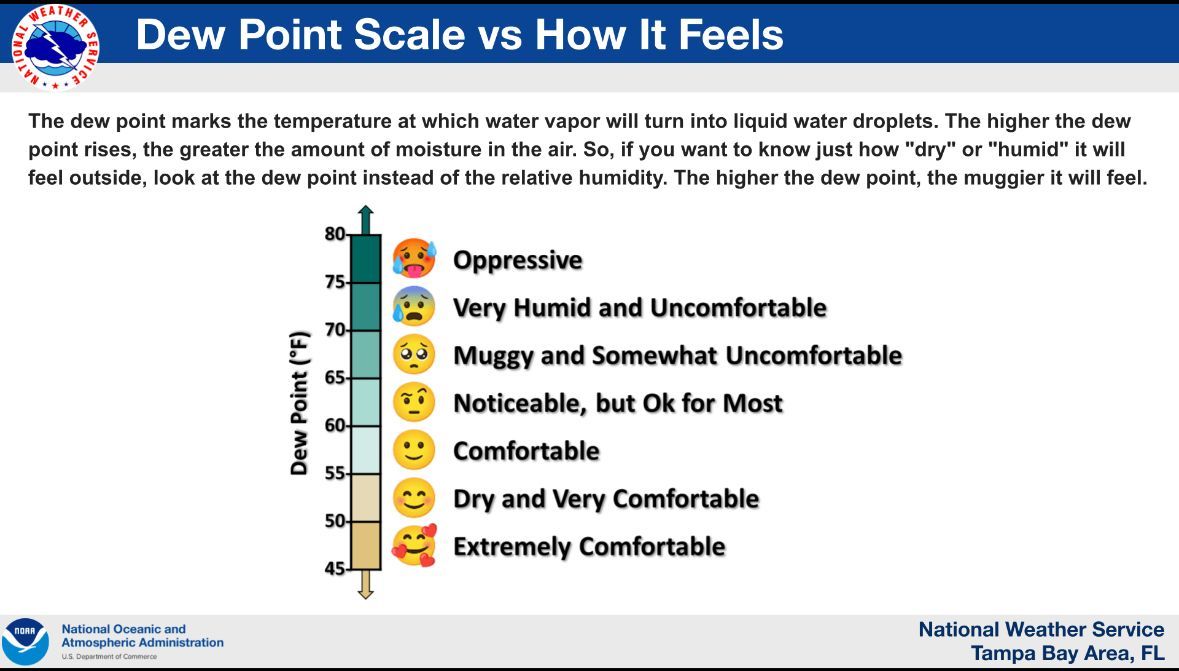
Humidity is the amount of water vapor in the air. Around here, especially once the warm weather settles in, that moisture becomes a big part of how your home feels. That is where dew point comes in.
What is dew point?
Dew point is the temperature where water vapor in the air starts turning into liquid water.
The easiest example is a cold glass of sweet tea outside on a hot summer day. After a few minutes, water beads up on the outside of the glass. The glass is not leaking, it's just "sweating". The outside surface is cold enough that moisture in the air turns into liquid water. That is condensation.
The same idea happens when dew forms on grass in the morning. It can also happen on a fogged windshield. When the glass is cooler than the dew point, moisture collects on it.
Outside, morning dew can look pretty in the sunrise light.
Inside your home?
Dew is a problem.
Why dew point matters for your AC
Your air conditioning system does two jobs:
- Cools the air.
- Removes moisture from the air.
When warm indoor air passes over the cold evaporator coil inside your air handler, the coil pulls heat out of the air. At the same time, moisture condenses on the coil and drains away through the condensate drain system.
Humidity removal is why your AC has a drain line.
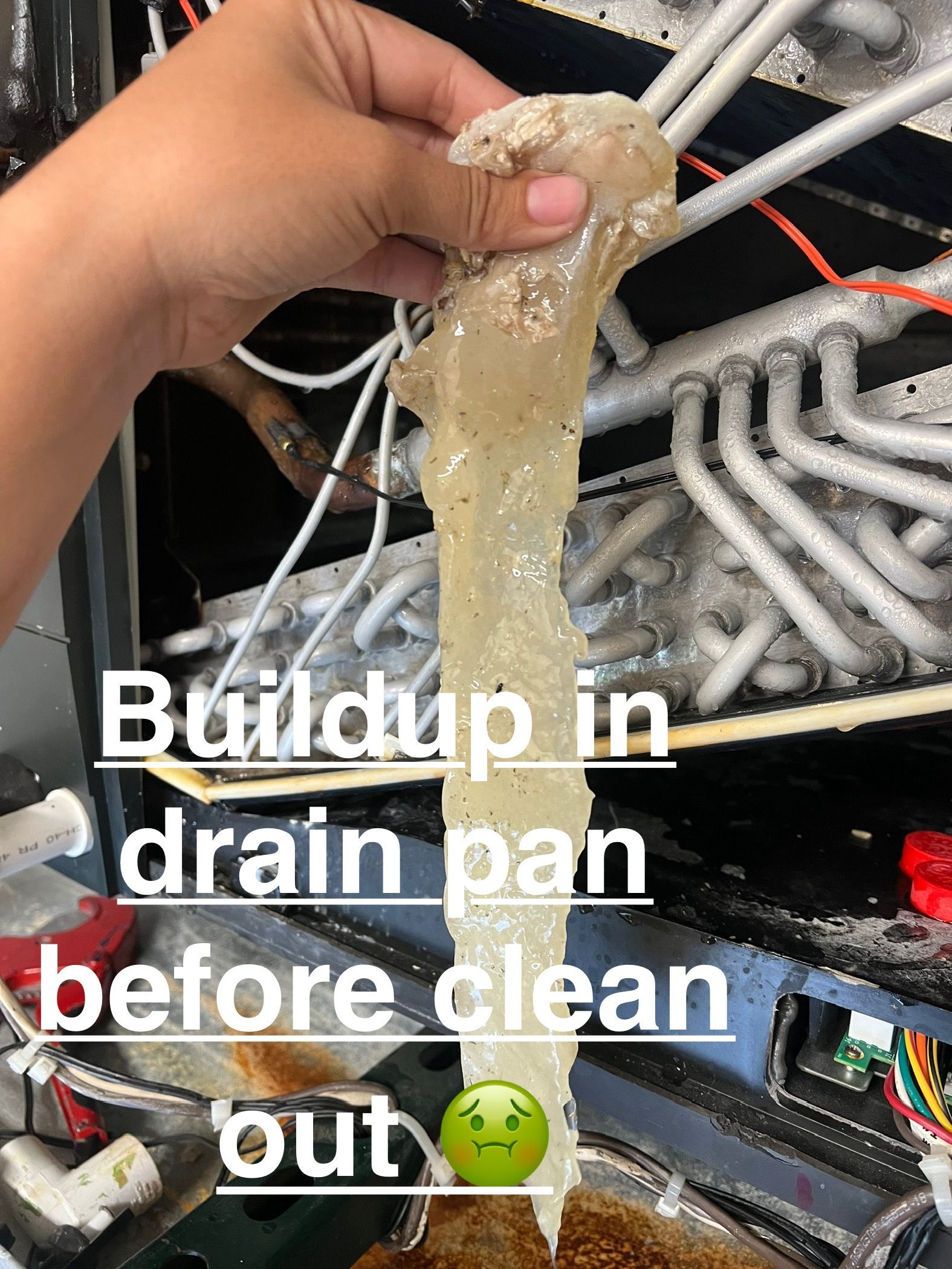
It is also why drain line clogs and float switch shutoffs are so common in Southwest Florida. Your system is pulling a lot of water out of the air for a big part of the year, and that moisture gradually builds up gunk inside the drain line.
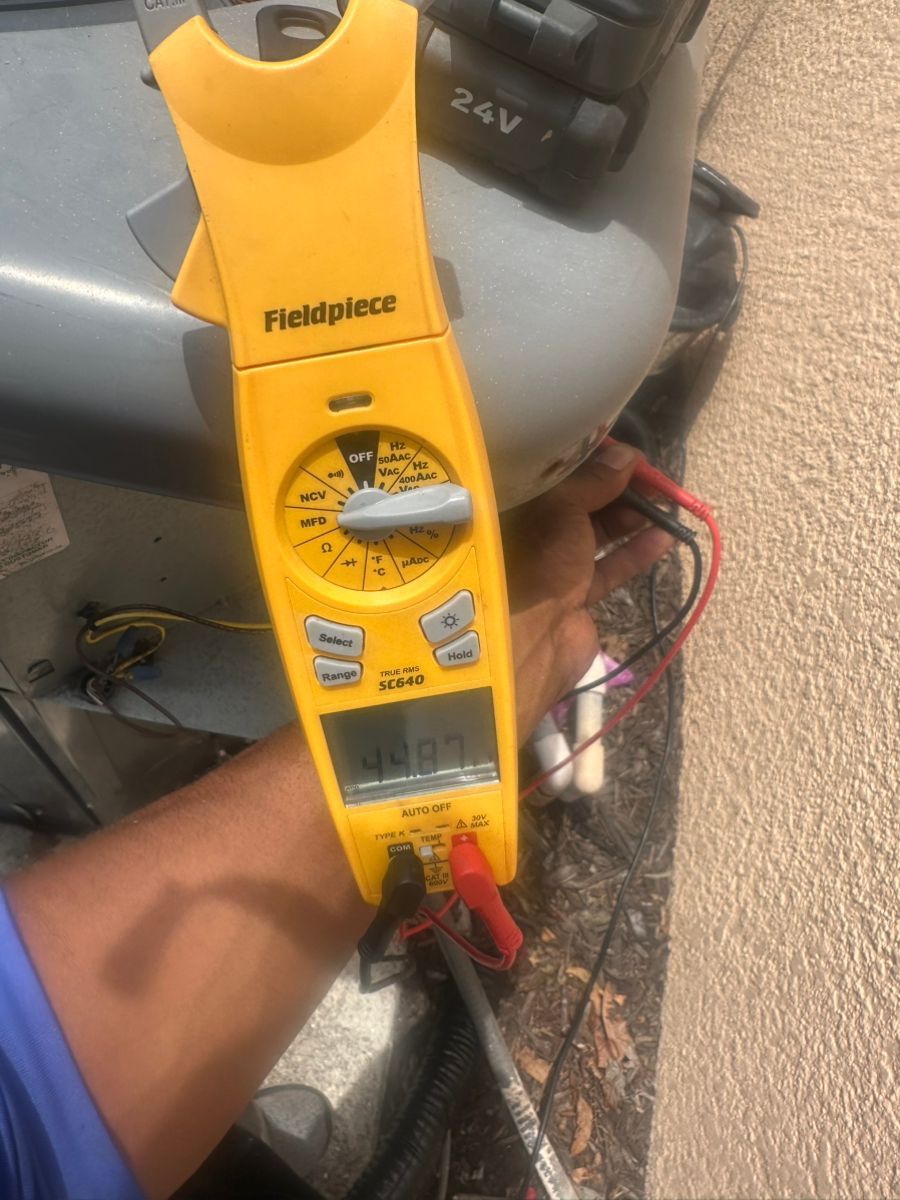
On a properly running system, it is common to see a temperature difference of roughly 15–20 degrees between return air and supply air. For example, 80° air going into the return may come out of the supply vents around 60–65° depending on system conditions.
That colder air helps cool the home, but it also means parts of the AC system can be cold enough to create condensation if the surrounding air is very humid.
Why air handlers and ducts sometimes sweat
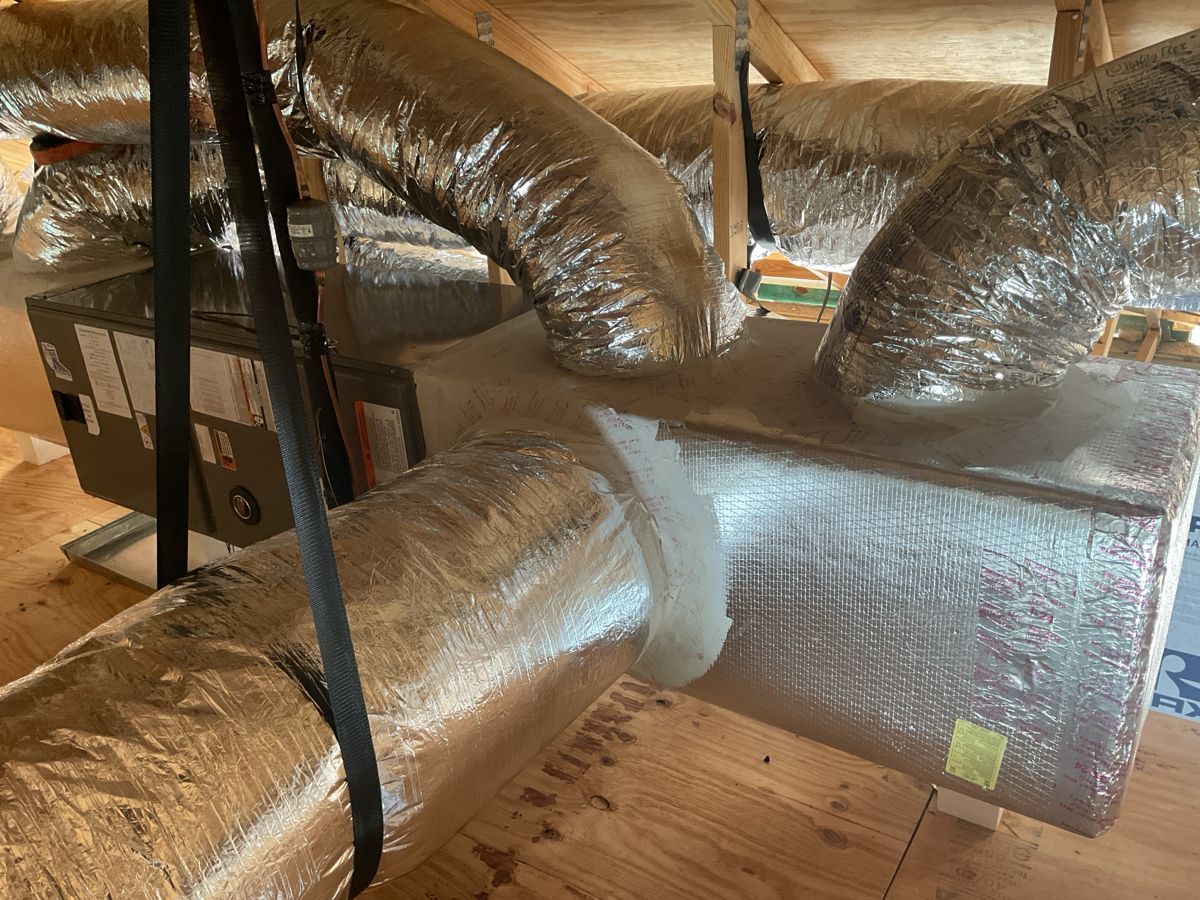
If the air around your AC equipment has a high dew point, cold surfaces can sweat.
That can include:
- Air handler cabinets
- Supply plenums
- Ductwork
- Metal collars and fittings
- Supply diffusers
- Equipment in garages, attics, or other unconditioned spaces
The most common trouble spots are air handlers and ductwork located in unconditioned garages, especially if the unit is in a ceiling alcove or hanging above the garage.
Why?
Because garages can create the perfect muggy-air environment. They are not always as hot as the attic, but they often have poor airflow and plenty of humidity. That moderate-temperature, high-humidity combination can push the dew point high enough that cooler surfaces start sweating.
Said another way: the AC may be working, but the environment around the equipment is muggy enough that condensation forms on the outside.
Why “just insulate it” is not always the full answer
When people see sweating ducts or a sweating air handler, the first thought is usually insulation.
Missing, damaged, or poorly sealed insulation absolutely needs to be corrected first.
But insulation alone does not fix high humidity.
Insulation reduces heat transfer. Meaning, insulation can lower the surface temperature or keep cold surfaces separated from warm air, but it does not automatically lower the dew point in the surrounding space.
In some situations, adding insulation or radiant barriers can lower the temperature of a space without removing moisture. That can actually bring surfaces closer to the dew point if humidity is still high.
Said another way, more insulation is great for lowering temperature, but if the humidity level isn't also addressed, lower temperatures can mean below dew point, which causes surfaces to "sweat".
That does not mean insulation or radiant barriers are "bad". They can be very helpful for energy efficiency and heat load. It just means they are not always the complete fix for muggy air or sweating equipment.
What about fans?
Fans can help air circulation. In some spaces, better airflow can reduce stagnant pockets of humid air.
But fans do not remove moisture from the air.
If the air being moved around still has a high dew point, the underlying issue remains. You may spread the humidity around more evenly, but you have not actually dried the air.
What about adding heat?
Technically, warming a surface can stop condensation because the surface rises above the dew point.
That is why your car defroster works. When your windshield fogs up, warm air heats the glass. Once the glass is warmer than the dew point, the fog clears.
But using heat to solve a humidity problem in a Florida home is usually not practical. We are actively trying to reduce heat, not add more of it. It can also create safety concerns depending on how someone tries to do it.
So yes, the physics make sense. But for a home AC system, adding heat is usually not the practical answer.
The real goal: lower the dew point
How? The best answer: lower the moisture content in the air.
Meaning, dehumidification.
Your home’s air conditioning system is usually the best dehumidifier you already own. When it runs properly, it cools the home and removes moisture from the air as part of that cooling process.
But your AC can only dehumidify the space it serves. If the air handler or ductwork is in an unconditioned garage, attic, or other humid space, that surrounding area may still have high humidity causing a high dew point.
For new homes, remodels, and major HVAC design work, the best comfort setup usually keeps as much of the system as possible inside conditioned or semi-conditioned space. A well-insulated roof deck, properly designed attic, sealed ductwork, good airflow, and air handlers located in conditioned interior space can all help reduce sweating, comfort issues, and long-term moisture problems.
No design is perfect for every home, but the goal is the same:
Keep the system accessible, protected, properly insulated, and operating in an environment that supports comfort.
So why does my home feel "muggy"?
A muggy home comes down to one main issue: too much moisture in the air.
That does not always mean the AC is broken. It means the system is either not removing enough humidity, not running long enough to remove humidity, or the space has moisture conditions the system is struggling to keep up with.
In Southwest Florida, "muggy" can happen quickly when outdoor dew points are high. Your AC may still be cooling the air, but if indoor humidity stays elevated, the house can feel sticky even when the thermostat looks normal.
We see an increase in "muggy" feeling calls every year around May, when outdoor temperatures and humidity levels begin to rise.
The common question: “Is the AC cooling?”
The better question: "Is the AC cooling AND dehumidifying?"
Variable capacity systems vs. single-stage systems
Not all AC systems control humidity the same way.
A basic single-stage system is either on or off. When it runs, it runs at full capacity. When the thermostat is satisfied, it shuts off.
That can work fine when the system is sized properly and running long enough. But during muggy weather, single-stage systems can struggle if they cool the home too quickly and shut off before enough moisture is removed.
Variable capacity systems work differently. Instead of only running at full blast, they can ramp up and down based on what the home needs. That longer, lower-speed operation can help improve comfort and humidity control because the system has more time to pull moisture out of the air.
Said another way:
A single-stage system is more like a light switch.
A variable capacity system is more like a dimmer switch.
Oversizing can make humidity worse
Bigger is not always better with air conditioning.
An oversized system can drop the temperature quickly, satisfy the thermostat, and shut off before it has enough runtime to remove moisture from the air. That can leave the house feeling cold but clammy.
This is one of the most common misunderstandings about AC comfort. People often think a larger system will cool better, but in Southwest Florida, comfort is just as much about humidity removal as temperature drop.
The right system should be sized for the home, the ductwork, the heat load, and the way the space is actually used. Our friends over at the Air Conditioning Contractors of America weighed in on this exact topic recently:
Correctly Sizing Variable-Capacity Heat Pump Equipment - ACCA HVAC Blog
Short cycling reduces dehumidification
Your AC removes humidity while it is running.
If the system keeps turning on and off in short bursts, it may never run long enough to properly dry the air.
Short cycling can be caused by:
- Oversized equipment
- Thermostat settings
- Dirty or restricted components
- Electrical or control issues
- Refrigerant or airflow problems
- Poor system setup
Whatever the cause, the result can feel the same to the people in the space: the thermostat says the it's cool, but the air still feels heavy.
Restricted or dirty components can hurt humidity control
Even when the system is sized and installed correctly, it still needs proper airflow and clean components to work well.
Dirty filters, dirty blower wheels, dirty evaporator coils, restricted ductwork, closed vents, or poor return air can all reduce performance.
The indoor coil is where cooling and moisture removal happen. If airflow is wrong or the coil is dirty, the system may not transfer heat and moisture the way it should.
A good maintenance visit should verify how the system is actually performing, not just whether it turns on, and make note of any excessively dirty components that are restricting airflow and impacting performance.
What you can check first
If your home feels muggy, start simple:
- Check the thermostat settings.
- Check the filter.
- Make sure supply vents are open.
- Look for water around the indoor unit.
- Pay attention to whether the system keeps shutting off (short cycling)
- Use an inexpensive indoor humidity meter if you have one.
If the house is cooling but still feels damp, sticky, or uncomfortable, the next step is checking how the system is actually performing.
What Siggs AC looks for
When we get a comfort or humidity complaint, we do not just look at the thermostat and guess.
We look at the system as a whole:
- Temperature split
- Filter condition
- Static pressure
- Airflow & motor speed settings
- Indoor coil condition
- Blower wheel condition
- Drain line condition
- Float switch operation
- Outdoor unit operation
- Thermostat settings
- Equipment age & type
- Ductwork and design concerns
The goal is to understand why the home feels uncomfortable, then explain the options clearly.
Sometimes the fix is simple.
Sometimes the system needs deeper maintenance.
Sometimes the issue is design-related.
The important part is finding the actual cause.
The Siggs takeaway
If your home feels muggy, even though the AC is running, the thermostat may only be telling part of the story.
In Southwest Florida, comfort depends on temperature, humidity, dew point, airflow, run time, and system condition. When dew points rise and the air gets heavy, your AC has to remove both heat and moisture to deliver the comfort you're expecting.
If airflow, drainage, run time, ductwork, or system performance is off, the space can feel sticky even when the thermostat looks fine.
The Siggs AC way: No pressure. No guessing. Just practical diagnosis and straightforward recommendations to help your home feel comfortable again.