One of the most common conversations we have during maintenance goes something like this:
“I change my own filters!”
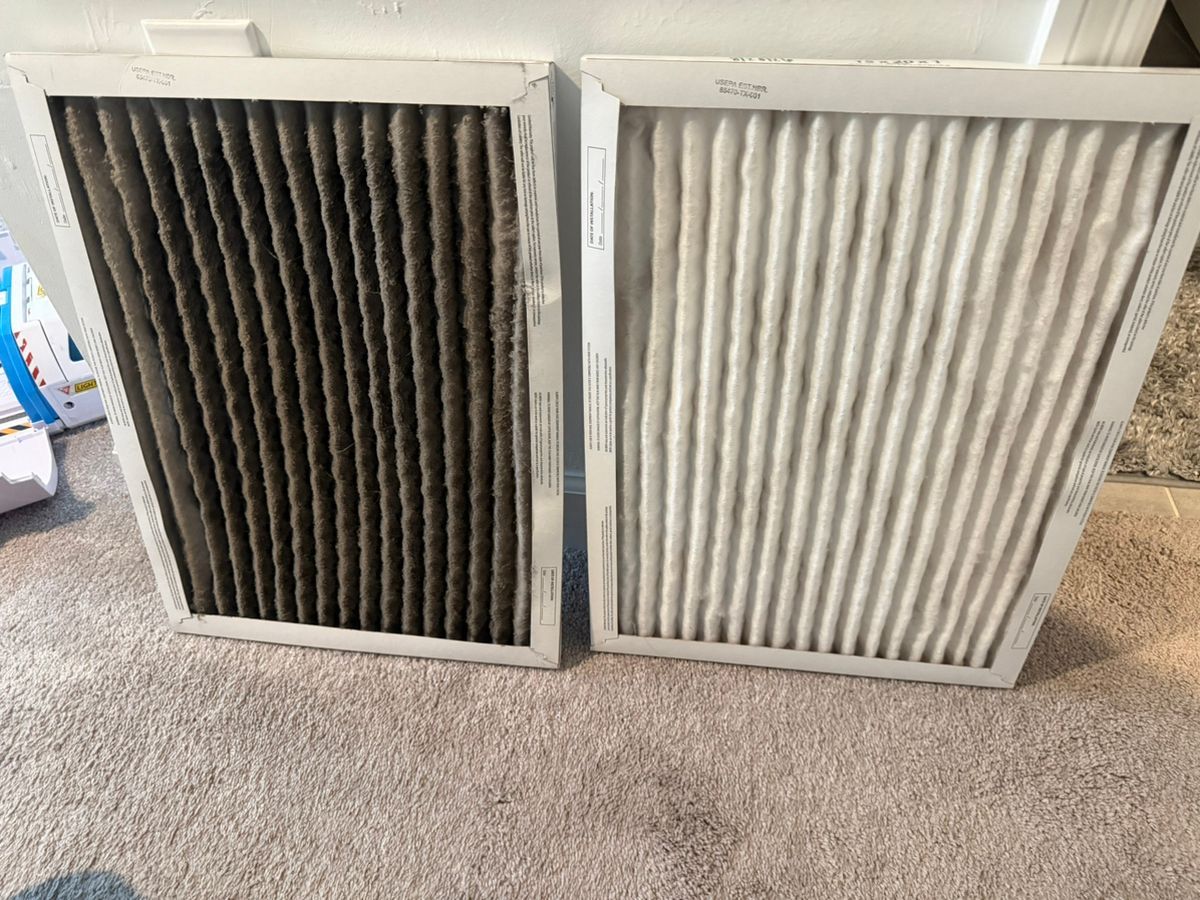
Then we pull one out that looks like it hasn't seen daylight in a year. 😅
No judgment. Filters are easy to forget, and some get dirty much faster than homeowners expect.
But here in Southwest Florida, where our air conditioners work hard for most of the year, something as simple as a dirty filter can affect cooling, airflow, humidity control, and even the lifespan of your equipment.
So how often should you actually change it?
The short answer: Check monthly, replace as needed
For most homes using standard 1-inch disposable filters, we recommend checking them every month and replacing them when they become dirty.
ENERGY STAR recommends checking HVAC filters monthly and replacing them at least every three months, or sooner if they become dirty.
https://www.energystar.gov/saveathome/heating-cooling
https://www.epa.gov/indoor-air-quality-iaq/guide-air-cleaners-home
But that doesn't mean every home needs the same schedule.
A full-time Fort Myers homeowner with two dogs, a busy family, and an AC system running throughout the summer may need replacements much more frequently than a seasonal resident who spends only part of the year in Florida.
The right interval depends on the filter, the home, and how much air is passing through the system.
Why do AC filters get dirty so quickly in Florida?
Your air filter catches particles circulating through your home's return air system.
That includes household dust, pet hair and dander, lint, pollen, and other airborne particles.
And unlike many parts of the country, where heating and cooling systems get extended breaks during mild weather, Southwest Florida air conditioners can run nearly year-round.
Every time the system operates, air passes through the filter, carrying more particles with it.
Add pets, renovations, construction dust, or a heavily occupied home, and some filters can become restricted surprisingly quickly.
A dirty filter isn't necessarily a sign of a dirty home. It means the filter is catching particles, which is exactly what it's designed to do.
The problem starts when it becomes too restricted for air to pass through properly.
What happens when you don't change your AC filter?
Your air conditioner needs a specific amount of airflow to operate correctly.
When a filter becomes excessively clogged, it creates resistance. Think of trying to breathe through a clean cloth versus one packed with dust.
Your blower has to work against that resistance, and the system may no longer move the amount of air it was designed to.
That can lead to weaker airflow at your vents, uneven room temperatures, reduced cooling performance, and higher operating costs.
In more severe cases, restricted airflow can contribute to evaporator coil freezing and equipment problems.
There's also another issue we commonly see:
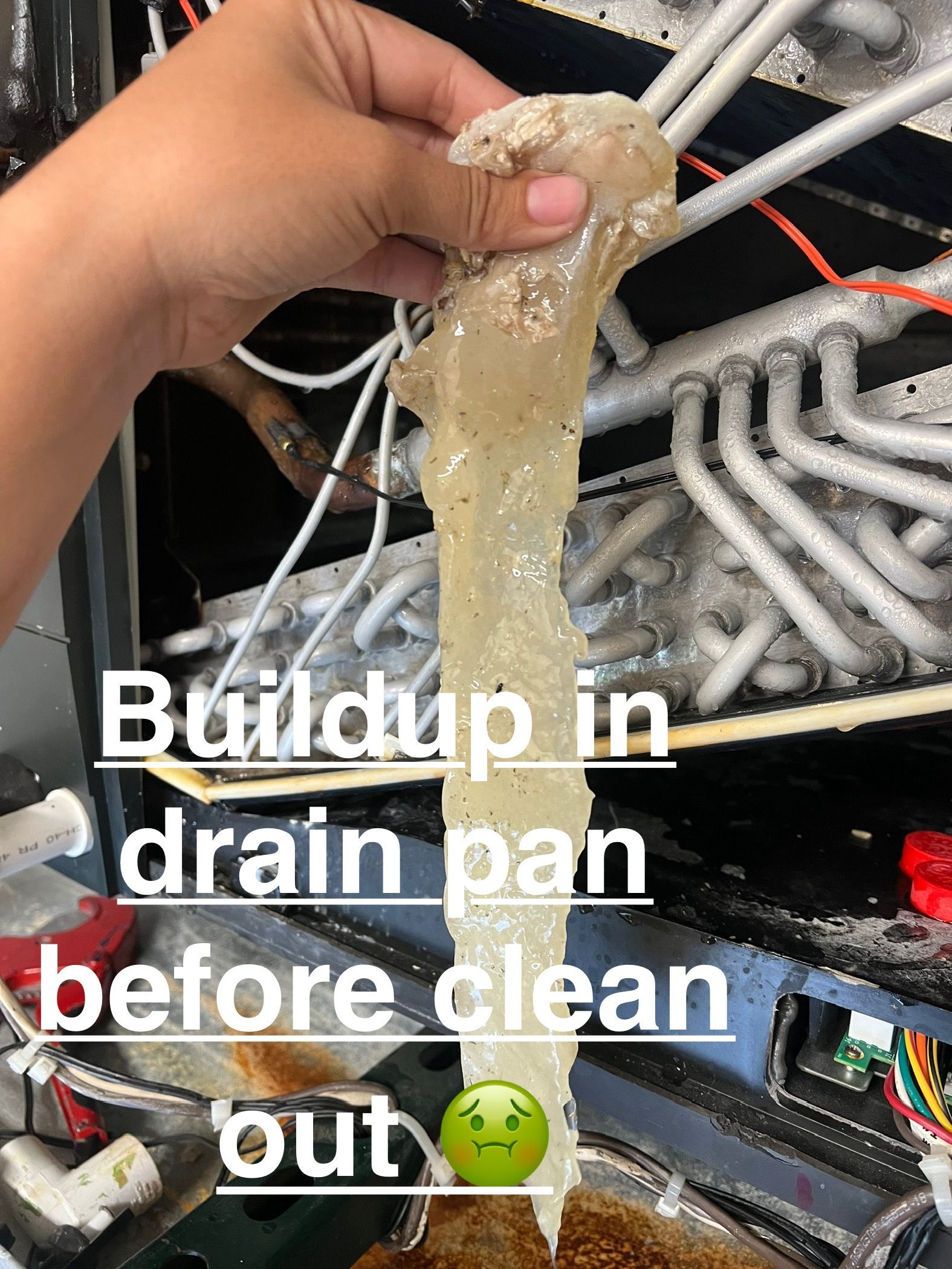
dirty blower wheels and evaporator coils.
If particles bypass the filter because of improper
installation, gaps around the filter, or problems in the return air system, they can accumulate on internal components.
That buildup can become expensive to remove, especially when components need to be disassembled for proper cleaning.
A relatively inexpensive filter replacement can help prevent a much bigger
maintenance problem.
Is a more expensive, higher-MERV filter always better?
Not necessarily.
MERV stands for Minimum Efficiency Reporting Value. In simple terms, it describes how effectively a filter captures particles of different sizes.
A higher MERV rating generally means better particle filtration.
That sounds great, right?
It can be! In fact, the EPA recommends MERV 13 filtration, or the highest rating your system can accommodate.
But there's a catch.
Not every HVAC system has the same filter area, ductwork, or available blower capacity.
Some high-efficiency filters, particularly those with limited surface area or heavy dust buildup, can create too much resistance to airflow.
The goal isn't to install the highest MERV number on the shelf.
It's to find a filter that provides good filtration
without restricting the airflow your system needs.
What about those thicker 4-inch filters?
This is one of our favorite filtration upgrades when the system has room for it.
Traditional filters are often just 1 inch thick. A properly designed 4-inch media filter provides substantially more filter surface area through deeper pleats.
That additional area can allow for better particle capture with less airflow resistance than a smaller filter of similar efficiency.
It can also increase the time between replacements, although the correct schedule still depends on the filter manufacturer's specifications and actual operating conditions.
The important part is proper
installation.
You can't simply cram a thicker filter into a cabinet designed for a 1-inch filter. The system needs a compatible media cabinet, appropriate sizing, and sufficient airflow.
When we evaluate these upgrades at Siggs AC, we're looking at the whole system, not just the filter.
How do we know if a filter is restricting airflow?
This is where HVAC maintenance becomes more than just cleaning.
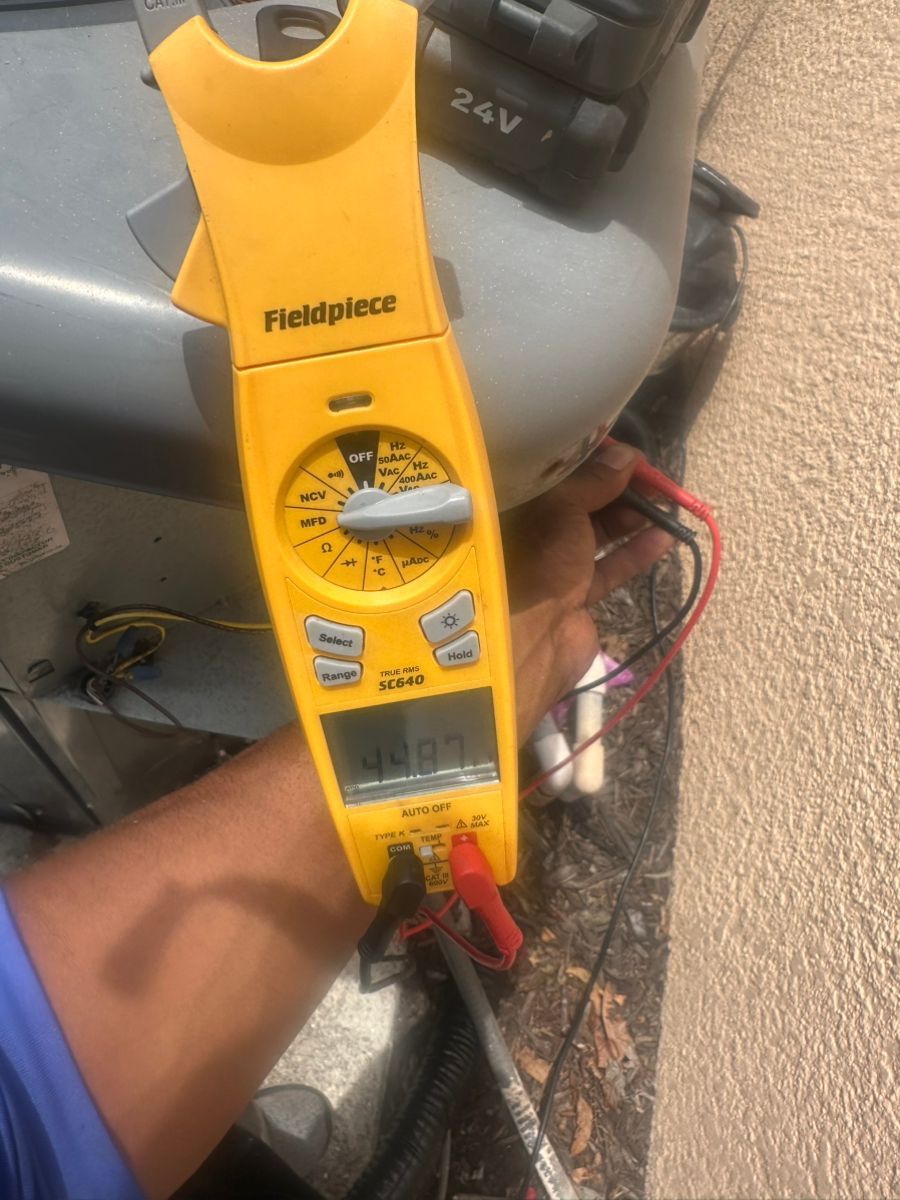
At Siggs Air Conditioning, our maintenance process includes checking
static pressure, which is a measurement of the resistance the blower encounters while moving air through the system.
We can compare measurements before and after replacing a dirty filter to help determine whether the filter is creating an excessive restriction.
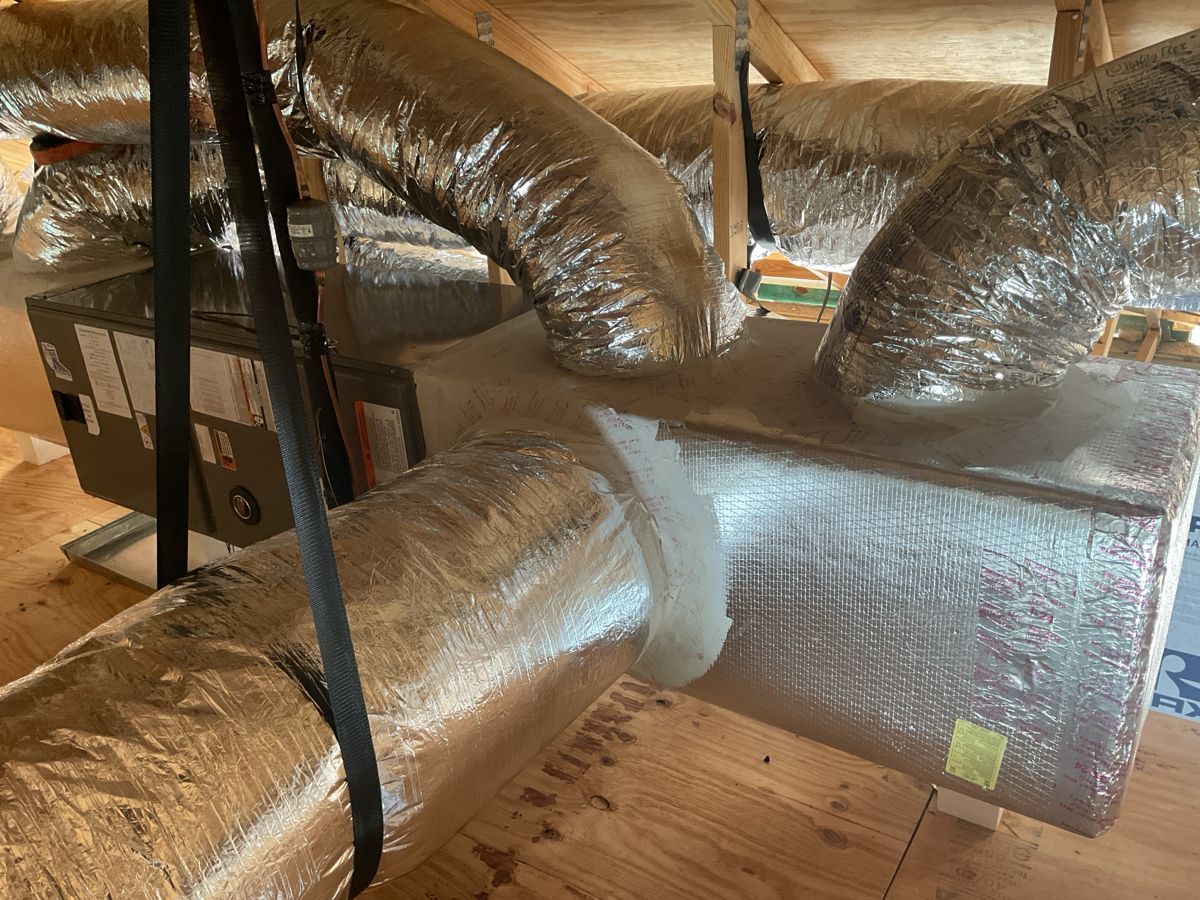
We also evaluate the ductwork, returns, blower, and overall system performance.
Sometimes a dirty filter is the problem.
Other times, the filter is only revealing a larger airflow issue that was already present.
That's why we don't recommend guessing or automatically installing the most expensive filter available.
A few easy habits that make a difference
Check your filter every month, especially during heavy cooling periods.
Make sure you're using the correct size and that the filter fits securely, without gaps allowing air to bypass it.
Pay attention to unusual dust buildup, whistling at return grilles, weak airflow, or filters that seem to get excessively dirty almost immediately.
And if you're unsure which filter belongs in your system, ask your AC company before experimenting.
We keep filter sizes and equipment information in our customer records so homeowners can get the right replacement without guessing.
The Siggs takeaway
Your air filter isn't just about keeping dust out of your home.
It's an important part of the HVAC system's airflow, cooling performance, and long-term reliability.
Check it regularly. Replace it when needed. Use the right filter for your system.
And if your filters are getting excessively dirty, your airflow seems weak, or you're interested in upgrading your filtration, have the system evaluated before assuming a more expensive filter will solve everything.
At Siggs Air Conditioning, our goal is simple: help you understand how your system works and make informed decisions about keeping it running properly.
HVAC you need. Without extras you don't.
Serving Fort Myers, Cape Coral, Lehigh Acres, and surrounding Southwest Florida communities since 1960.
Call or text 239-694-1205 | siggsac.com